Clemson Quantum Club · November 9–20, 2026
Qiskit Fall Fest 2026
Qiskit Fall Fest is the yearly series of student-led quantum computing events that IBM Quantum supports on campuses around the world. This November, Clemson Quantum Club runs two weeks of seminars, guided Qiskit labs, and challenges to mark a decade of quantum computing on the cloud.



About
This is Clemson Quantum Club’s third Qiskit Fall Fest. This year’s theme marks ten years since IBM put the first quantum computer on the cloud.
Our Fall Fest runs for two weeks, with a session every Monday, Wednesday, and Friday. Each session opens with a seminar on that day’s topic, led by a guest speaker from research or industry or by the organizers, followed by a guided Qiskit notebook. All labs and challenges run on qBraid, a cloud platform that gives you more time on IBM Quantum processors and other quantum hardware. The topics build up to quantum error correction, but each session starts from the basics, so you do not need any quantum background. If you want a head start, the Learning Resources page has tutorials you can work through before the first session.
Key Details
- Dates
- November 9–20, 2026
- Time
- 5:00–6:00 PM on Mondays, Wednesdays, and Fridays
- Location
- Clemson University, rooms TBD
- Prizes
- Qiskit merch for the top 5 local participants
- Cost
- Free to attend
- Experience
- No quantum background required
2016–2026
A decade on the cloud.
In 2016 IBM put a five-qubit processor online for anyone to program. Ten years later, students at Clemson can write a circuit in the morning and have it running on real quantum hardware the same day.
Sessions
Each session pairs a seminar with a notebook lab and releases a challenge. Come to one or all six. Open a session to see the plan; its challenge is in the Challenges section below. Create free IBM Quantum and qBraid accounts before you arrive so your first job runs on Monday, November 9.
Quantum and Qiskit 101
Guest seminar (speaker TBD) to open the two weeks with the foundations: what a qubit is, superposition, measurement, the Bloch sphere, gates as rotations, and entanglement through the Bell pair and GHZ states. From there we move to Qiskit: the four steps every Qiskit program follows, and how the same circuit runs on a simulator and on an IBM quantum processor. It closes with how the hardware has changed since 2016.
Real hardware, noise, and error mitigation
Seminar by the organizers: how IBM’s superconducting processors work, what T1, T2, and readout error mean, and why circuits are transpiled before they run. The math for the day is multi-qubit states as tensor products and gates as unitary matrices. Then the first steps toward error correction: suppressing and mitigating errors so a noisy processor’s answers land closer to the ideal ones. You run each circuit on a simulator and on an IBM processor and compare the two.
Quantum algorithms
Guest seminar (speaker TBD) on quantum algorithms. First the textbook ones: Grover’s search, which finds a marked item in an unsorted list with quadratically fewer queries, and the quantum Fourier transform, the building block behind phase estimation and Shor’s algorithm. Then the variational ones running on today’s processors: the Max-Cut problem, how a graph becomes an Ising Hamiltonian, what the QAOA circuit is doing, and VQE for finding the ground-state energy of a small molecule. Hybrid quantum-classical methods suit noisy hardware, and the lab shows how to read a good answer out of noisy samples.
Quantum cryptography
Seminar (speaker TBD) on quantum cryptography: why measuring a quantum state disturbs it, the no-cloning theorem, and BB84, the protocol that uses those two facts to share a secret key and catch an eavesdropper. We run BB84 as circuits, add an eavesdropper, and watch the error rate give her away. The seminar closes on why Shor’s algorithm threatens today’s public-key encryption and what post-quantum cryptography is doing about it.
HPC and quantum machine learning
Seminar by the organizers on high-performance computing for quantum: simulating circuits at scale with tensor networks and GPUs, the quantum-centric supercomputing model in which a classical cluster and a quantum processor share the work, and running large simulations on Clemson’s Palmetto 2 cluster. Then quantum machine learning: encoding data into qubits, quantum kernels and variational classifiers.
Quantum error correction
Seminar (speaker TBD) to close the two weeks with quantum error correction: why a qubit can’t be copied but its information can be spread across many, the bit-flip and repetition codes, and syndrome measurement with mid-circuit measurement and feed-forward. Quantum teleportation uses the same trick, and it is how today’s chips build long-range entanglement. We end with the surface code and what a fault-tolerant processor needs.
Challenges
Each challenge builds on that day’s lab and is scored out of 100. The first ten people to reach a full 100 on a challenge also get a bonus: 10 points for the first, down to 1 point for the tenth. The overall standings add your scores and bonuses across all six challenges. Scoring is individual: the top 5 local participants when the leaderboard closes on Sunday, November 22 at 11:59 PM get Qiskit merch. Submission details come with the first challenge on Monday, November 9. Open a challenge below for its files and its own leaderboard; the overall standings are here, and both update live.
Overall standings
The leaderboard opens with the first challenge on Monday, November 9 at 6:00 PM.
Biggest GHZ state
Entangle the most qubits in a GHZ state on real hardware.
The leaderboard opens Monday, November 9 at 6:00 PM.
Transpile golf
Fit a given circuit onto an IBM processor’s layout with the fewest two-qubit gates, then run it there with error mitigation. Fewer gates score higher; the mitigated result breaks ties.
The leaderboard opens Wednesday, November 11 at 6:00 PM.
Max-Cut with QAOA
Find the best cut of a 12-node graph from samples taken on real hardware.
The leaderboard opens Friday, November 13 at 6:00 PM.
Catch the eavesdropper
Spot which BB84 key exchanges were intercepted.
The leaderboard opens Monday, November 16 at 6:00 PM.
Quantum kernel classifier
Reach the highest accuracy on a held-out test set.
The leaderboard opens Wednesday, November 18 at 6:00 PM.
Repetition code
Get the lowest logical error rate on real hardware.
The leaderboard opens Friday, November 20 at 6:00 PM.
FAQ
What happens at each session?
A seminar on that day’s topic, then a Qiskit lab on qBraid, then that session’s challenge for the leaderboard.
Do I need quantum computing or Qiskit experience?
No. The seminars assume no background, and the labs start with your very first circuit.
Do I have to attend every session?
No. Every session stands on its own, so come to one or all six. Each session’s challenge counts toward the leaderboard, so more sessions means more points.
What should I bring?
A laptop to every session. Create free IBM Quantum (Open Plan) and qBraid accounts before Monday, November 9; we will help you connect them in the first session.
Is it free?
Yes, Qiskit Fall Fest at Clemson is free to attend.
Who can attend?
Anyone can join. Prizes are for local participants, handed out at Clemson Quantum Club’s meeting on Tuesday, November 24 at 5:00 PM in McAdams 107.
Who runs it?
Clemson Quantum Club, with support from IBM Quantum as a Fall Fest PLUS event.
Is it in person or online?
In person at Clemson University from 5:00 to 6:00 PM on Mondays, Wednesdays, and Fridays, November 9–20. Rooms will be posted here once they are confirmed, and everyone who registers gets an email. The notebooks, slides, and challenges will be posted on this page.
Are there prizes?
Yes. The top 5 local participants on the overall leaderboard when it closes get Qiskit merch.
How are challenges scored?
Each challenge is scored out of 100. The first ten people to reach a full 100 on a challenge get a bonus: 10 points for the first, down to 1 point for the tenth. The overall standings add both across all six challenges.
When does the leaderboard close?
Sunday, November 22 at 11:59 PM.
Is there a code of conduct?
Yes. Everyone at Fall Fest agrees to the Clemson Quantum Club code of conduct.
How do I register?
Use the registration form, also linked at the top of this page.
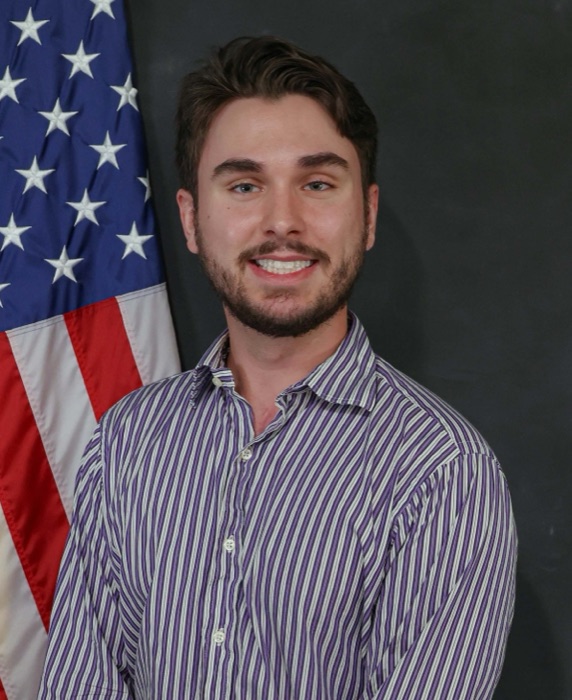
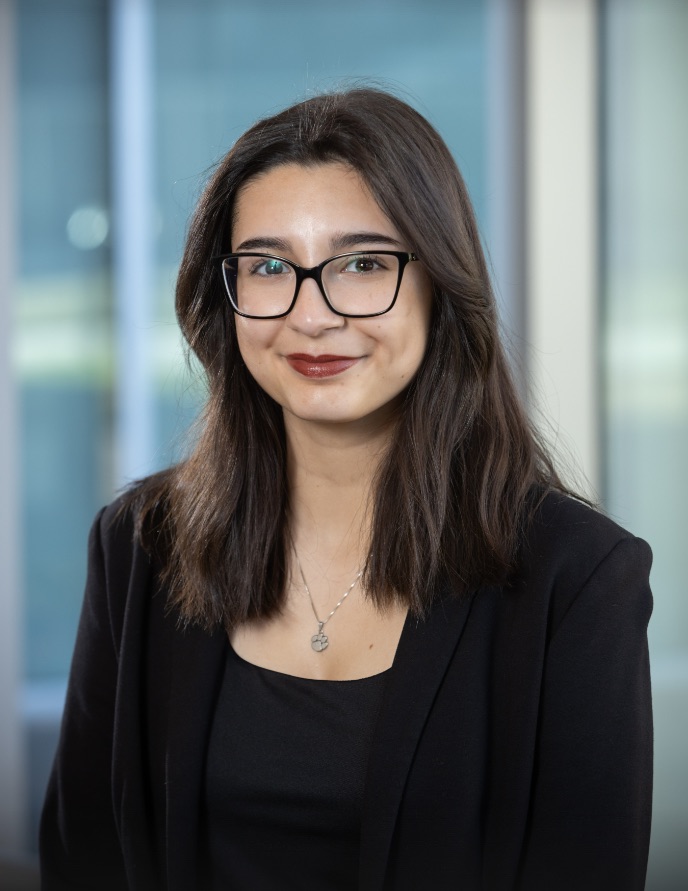
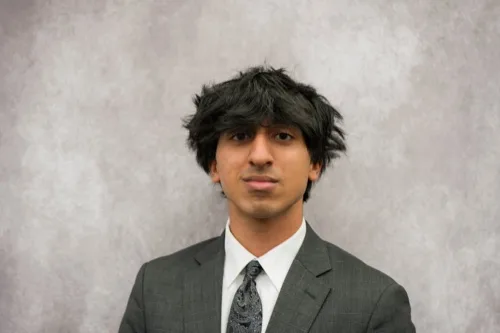
Organizers