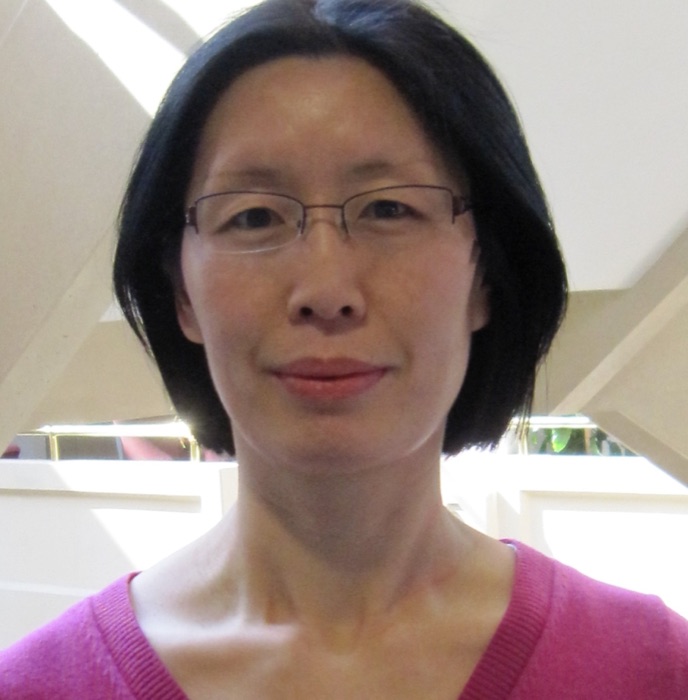
Faculty advisor for the Clemson Quantum Club. Teaches the Hands-on Quantum Computing Creative Inquiry (CPSC 3990), Introduction to Quantum Computing (CPSC 4750/6750), and Quantum Algorithms and Applications (CPSC 4760/6760). Research interests include high-performance computing, quantum computing education, and quantum workforce development.
Resources
Start here
Quantum Courses at Clemson
CPSC
- Creative Inquiry: Hands-on Quantum Computing (CPSC 3990)
- Introduction to Quantum Computing (CPSC 4750/6750)
- Quantum Algorithms and Applications (CPSC 4760/6760)
PHYS
- Quantum Mechanics I/II (PHYS 4550/4560, 6550/6560; PHYS 9510/9520)
- Quantum Field Theory (PHYS 9530)
- Open Quantum Systems (PHYS 8750)
IE
- Creative Inquiry: Quantum Optimization for Resilient Systems (IE 4040)
Quantum Faculty at Clemson
Several Clemson professors conduct research and teach courses in quantum computing, quantum information, and quantum physics.
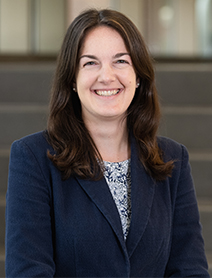
Teaches the Quantum Optimization for Resilient Systems Creative Inquiry (IE 4040). Research focuses on quantum optimization for resilient systems, with applications in disaster relief, logistics, and supply chain resilience using stochastic, discrete, and quantum optimization methods.
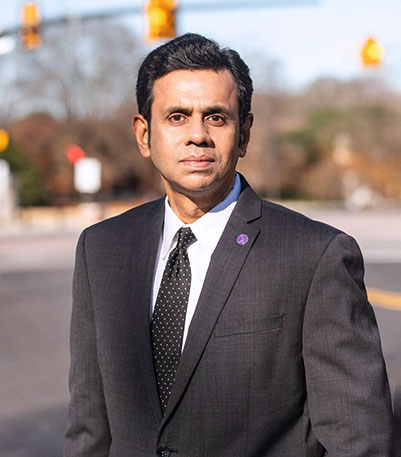
Eugene Douglas Mays Chair of Transportation in the Glenn Department of Civil Engineering and founding director of the USDOT Center for Connected Multimodal Mobility. His quantum work targets cybersecurity for transportation and smart-city / IoT infrastructure, integrating AI with quantum computing to detect and respond to cyber threats, including the SC Quantum Sentinel initiative. Named a 2024 Clemson University Researcher of the Year.
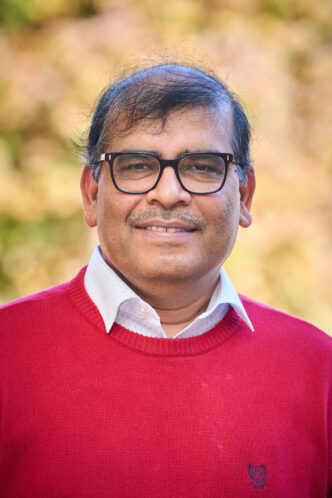
An American Physical Society Fellow whose research focuses on topological quantum computation, Majorana fermions, superconductivity, and condensed matter theory. Teaches Quantum Mechanics I/II (PHYS 4550/4560, 6550/6560, 9510/9520) and Quantum Field Theory (PHYS 9530). His work on semiconductor-superconductor heterostructures underpins one of the most widely studied platforms for fault-tolerant quantum computing.
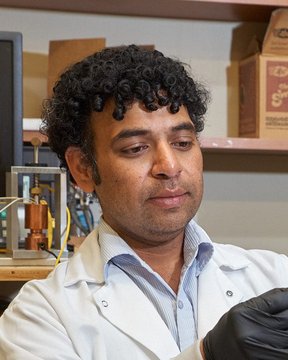
Directs the Laboratory of Nano-BioPhysics and teaches Open Quantum Systems (PHYS 8750). His research spans quantum machine learning, nanoscale physics, and nano-bio interfaces, combining condensed matter physics and optical spectroscopy with quantum methods. He is a Fellow of the Royal Society of Chemistry and the Institute of Physics.